In 1907, the New Zealand Government passed an Act with a single purpose: to suppress tohunga and the traditional Māori knowledge and beliefs they held. It was not repealed until 1962. This was in addition to the Natives Schools Act, repression of reo Māori and culture and other systematic cultural erasure.
I grew up seeing its effects, the knowledge gap in my parents’ generation, the customs my generation had to relearn at marae and in homes by our kaumātua who didn’t teach their children, because they had nearly been lost.
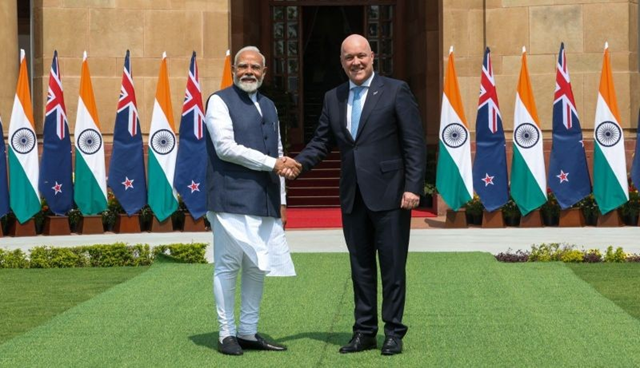
119 years later, a Free Trade Agreement signed with India on 27 April 2026 is attempting something that the successive colonial legislation and in particular the Tohunga Suppression Act never could, and doing it not with threats of imprisonment, but with the language of partnership, economic opportunity, and cultural celebration. The same National lead coalition government that is rolling back Treaty rights at speed now signs a trade agreement with the current support of Labour, that commits our healing knowledge to an international framework without our consent.
The Tohunga Suppression Act 1907
Introduced by Māori MP James Carroll, the Act’s preamble described our tohunga as:
“… designing persons, commonly known as tohungas, practise on the superstition and credulity of the Maori people by pretending to possess supernatural powers in the treatment and cure of disease, the foretelling of future events, and otherwise, and thereby induce the Maoris to neglect their proper occupations and gather into meetings where their substance is consumed and their minds are unsettled, to the injury of themselves and to the evil example of the Maori people generally.”
The holders of wānanga, the experts in rongoā, the practitioners of moko, the keepers of karakia, reframed as con artists. The first offence was a fine of £25 or six months in prison. But it largely failed due to the fact that there were very few prosecutions and only nine convictions. Tohunga essentially went underground, with many dying with out sharing their knowledge, while some Māori kept seeking rongoā. The knowledge survived though, not without cost as much was lost. What we have today exists because of a small number of knowledge holders who kept it alive despite everything, and the revival work of recent decades.
The knowledge survived because of where it lived: in people, in the relationship between tohunga and rangatahi, in karakia passed through families, in the understanding of which plant grows where, what it heals, which karakia accompanies its gathering, and who holds the mana to use it. That knowledge lived in community, in whakapapa, in living relationships that no Act of Parliament could reach. You cannot imprison a relationship; You cannot fine a whakapapa. The Crown attacked the body, the tohunga, the practitioner. The FTA attacks the knowledge itself.
What the 2026 Agreement Threatens to Do
The NZ–India FTA contains a Cultural, Trade, Traditional Knowledge and Economic Cooperation Chapter that explicitly names rongoā Māori as a subject of bilateral cooperation. It establishes a joint working group, mutual recognition frameworks, and joint research programs. Most critically, it names artificial intelligence software, e-commerce platforms, and digital distribution infrastructure as the vehicles through which traditional knowledge will be ‘preserved and restored. This is extraction and extraction is something the 1907 Act never managed to achieve.
Once knowledge enters an AI training dataset, it cannot be recalled. It is owned by faceless conglomerates who will commercialise it. Unlike the tohunga who could go underground, knowledge encoded in a database can be copied infinitely, redistributed globally, and recombined into commercial products without attribution, compensation, or consent forever.
Three Ways the FTA Goes Further
1. The 1907 Act attacked the practitioner. The FTA attacks the knowledge.
The Tohunga Suppression Act required a tohunga to be present, someone to witness, charge, and prosecute. The knowledge itself was unreachable. The FTA’s digital provisions make the tohunga irrelevant. Once rongoā knowledge is documented and encoded in an AI training dataset, it no longer needs a living practitioner to carry it. It becomes a dataset, processed, recombined, and commercialised without any tohunga involved at all, permanently outside community control.
The 1907 Act needed us to stop practicing. The FTA needs us to start sharing, and it has structured the incentives into partnership, economic opportunity and research prestige to make that sharing feel like progress.
2. The 1907 Act used force. The FTA uses commercial incentive.
The 1907 Act was blatant in its colonialism. Tohunga were ‘designing persons.’ The Crown made no pretence this was for Māori benefit and that honesty generated resistance. But Māori recognised the threat and protected some of their knowledge.
The FTA is designed to disarm that resistance and speaks of acknowledging Māori economic and cultural aspirations. It frames extraction as preservation and offers business exchanges and research partnerships. It presents Māori inclusion as a benefit conferred rather than rights that are owed. This is the colonial logic of the gift, the same logic through which land was purchased for muskets and Treaty articles became instruments of dispossession. The gift arrives dressed as partnership, but the cost is paid later.
3. The 1907 Act could be repealed. The FTA’s damage cannot be undone.
The Tohunga Suppression Act was repealed in 1962, while late, it was still to a point reversible. Tohunga who had gone underground could resurface and share their knowledge, much like the revitalisation of the Māori language has taken some 40 years. Communities could reclaim what had been suppressed. There is no equivalent reversal for extracted knowledge. Once rongoā is in an international AI dataset, a wellness platform, or a published research program, it cannot be recalled, unbranded, or unpublished. Suppression was reversible, extraction is not.
What Is Actually at Risk
Rongoā Māori is not a list of plants. It is a living practice embedded in whakapapa, governed by tikanga and oral traditions, transmitted through the relationship between tohunga and community. Its efficacy is inseparable from the karakia that accompanies gathering, the whakapapa relationships between species and community, the conditions of tapu and noa that govern use.
An AI system cannot hold those relationships. It can hold data points such as a plant name, preparation method, condition treated. Separated from whakapapa, from the tohunga’s knowledge lineage, from the karakia that gives it meaning, that data is not rongoā. It is a vague resemblance of rongoā and that resemblance, encoded in an AYUSH wellness database or distributed through an international platform, will be presented to the world as Māori traditional medicine.
Our knowledge will be represented globally by a version of itself stripped of everything that makes it ours. The Tohunga Suppression Act tried to make our knowledge disappear. The FTA risks making a copy of it appear everywhere and that copy will belong to whoever built the platform.
WAI 262
The WAI 262 claim, reported by the Waitangi Tribunal in 2011, establishes that Māori retain tino rangatiratanga over mātauranga Māori and the taonga species to which it relates. The Waitangi Tribunal has also recognised the Tohunga Suppression Act as a breach of Te Tiriti Article II. That breach was eventually acknowledged through repeal.
The NZ–India FTA was negotiated in nine months. I am not aware of a single hapū or iwi whose Free, Prior and Informed Consent was sought before their rongoā knowledge was made the subject of binding international cooperation commitments. The Crown exercised kāwanatanga to commit to something that affects Article II rights, the same constitutional pattern the Waitangi Tribunal has consistently identified as a Treaty breach. The difference between 1907 and 2026 is method. One used a statute while the other uses a trade agreement. One criminalised the practice, the other commercialises the knowledge.
Conclusion
Our tīpuna faced the Tohunga Suppression Act with no legal framework, no international declarations and no data sovereignty principles. They had tikanga, whakapapa, and the knowledge that what they held was sacred. They went underground, they waited and much of the knowledge has survived, while much was also lost.
The Tohunga Suppression Act was defeated by people who had nothing but their determination. If we cannot protect our knowledge now, with everything our tīpuna were denied, then failure belongs to us. The 1907 Act was honest about what it wanted. This FTA is not. The danger has not lessened; it has learned to smile.
Disclaimer: I asked Claude to review my short essay and to remove my personal frustrations and to make it more politically neutral.