Te Kete o Karaitiana Taiuru (Blog)

Archive


  • Google DeepMind hires ‘philosopher’ to work on machine consciousness

    Google DeepMind hires ‘philosopher’ to work on machine consciousness

    As AI systems grow more capable, companies appear increasingly willing to look beyond traditional engineering disciplines for guidance on questions that touch on consciousness, identity and what it means to interact meaningfully with a machine. On 13 April 2026, Google DeepMind announced it had hired philosopher Henry Shevlin to study machine consciousness, human AI relationships,

    Know More

  • Mana Without Mātauranga – Digital Ethics

    Mana Without Mātauranga – Digital Ethics

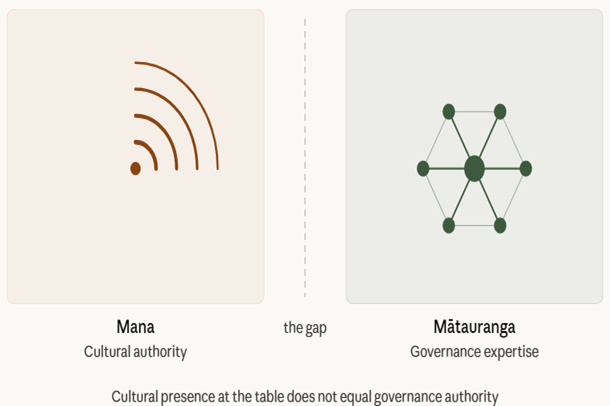
    There is a pattern in New Zealand’s AI and data governance landscape that is rarely named directly, but it is immediately recognisable to anyone who has worked in this space. When organisations, government agencies, technology companies, universities, and research institutions decide they need Māori input into their AI and Data ethics frameworks, they do not,

    Know More

  • Human Resilience with AI

    Human Resilience with AI

    I was honoured to be one of the 386 international AI ethics experts to contribute a short essay to the “Building a Human Resilience Infrastructure for the Age of AI: Experts Call for Radical Change Across Institutions, Social Structures” report and contribute a Te Ao Māori perspective to the Epistemic Vigilance: Discerning Truth, Illusion and

    Know More

  • AI Bias with Māori in Job Interviews

    AI Bias with Māori in Job Interviews

    The past few days we are hearing about AI and recruitment issues with you a young man who faced bias. I am increasingly concerned that the media is not giving Māori any consideration with their AI bias stories, relying on academics for opinions and for them to talk about us like we are not capable

    Know More

  • Governing in the Age of Artificial Intelligence

    Governing in the Age of Artificial Intelligence

    Artificial intelligence is no longer an emerging technology on the horizon, it is here, transforming industries, reshaping workforces, and fundamentally altering how organisations create value. For New Zealand boards, AI represents both a profound opportunity and a significant governance challenge. Directors who treat AI as purely a technical matter, something to be delegated to the

    Know More

  • Kaupapa Māori AI Framework

    Kaupapa Māori AI Framework

    I am excited to release, perhaps the world’s first Indigenous Peoples AI Framework for understanding and describing the nature of an Artificial Intelligence (AI). Drawing on mātauranga Māori, tikanga Māori, and te reo Māori, the framework is encapsulated in the whakatauāki :He Tangata, He Karetao, He Ātārangi” (A person, a puppet, a shadow). Each term describes

    Know More

  • Responsible AI in New Zealand

    Responsible AI in New Zealand

    New Zealand has developed a comprehensive suite of AI governance instruments, including the Algorithm Charter (Stats NZ, 2020), Privacy Act 2020, Digital Identity Services Trust Framework Act 2023, Biometric Processing Privacy Code 2025 (Office of the Privacy Commissioner, 2025), and responsible AI guidance for both public and private sectors (Ministry of Business, Innovation and Employment,

    Know More

  • Autonomous AI Governance Guidance for New Zealand Organisations

    Autonomous AI Governance Guidance for New Zealand Organisations

    This document provides governance guidance for New Zealand organisations considering the deployment of autonomous AI agents. It is not legal advice. It is written by a practitioner with governance experience in New Zealand and expertise in international AI governance. Autonomous AI agents such as OpenClaw represent a material shift in organisational risk. Unlike conventional AI,

    Know More

  • Māori likely to see graphic or extreme content

    Māori likely to see graphic or extreme content

    The 2026 Online Exposure: Experiences of Extreme or Illegal Content in Aotearoa report from the Classification Office provides a comprehensive look at the prevalence and impact of extreme or illegal online content within New Zealand. This report examines the experiences of extreme or illegal content among various age groups and how it affects the population.

    Know More

  • Māori views of Digital Credentials

    Māori views of Digital Credentials

    In New Zealand, a digital credential is a secure, digital version of something that proves who you are or what you’re entitled to, for example your identity, age, or role in a business that you can store in a wallet style phone or device app and present online or in person. This includes your digital

    Know More

  • Will the AI bubble burst?

    Will the AI bubble burst?

    Is the AI Bubble About to Burst? Understanding the 2025 Market Wobble Recent headlines warning of an “AI bubble burst” have dominated tech news as AI-linked stocks experience significant volatility. But before we panic, we need to understand: what does history tell us about technology booms, busts, and the real value that emerges afterward? AI

    Know More

  • NZ specific AI and Generative AI Policy template for education

    NZ specific AI and Generative AI Policy template for education

    An AI & Generative AI Policy in education isn’t optional anymore. Schools and tertiary institutions are already surrounded by AI, whether they have a policy or not. Students are using ChatGPT style tools to draft essays, teachers are turning to AI to plan lessons, and admin teams are experimenting with AI for reporting, analytics, and

    Know More

  • Risks of AI Agents to Māori

    Risks of AI Agents to Māori

    AI Agents are to Māori what Captain Cook and his Endeavour Ship and crew were. If Māori understood the challenges and intergenerational colonisation they were capable of, the historical outcomes would be very different. Artificial Intelligence (AI) agents are rapidly becoming autonomous actors within social, economic, and governmental systems. For Māori, these agents introduce new

    Know More

  • NZ and Australia companies prioritise Data Sovereignty

    NZ and Australia companies prioritise Data Sovereignty

    The Datacom 2025 ANZ Cloud and Infrastructure Report reveals a marked escalation in concerns surrounding data sovereignty among organisations across Australia and New Zealand. These concerns are primarily driven by security, regulatory compliance, and the rapidly intensifying computational demands of artificial intelligence (AI). 61% of respondents in New Zealand and 60% of respondents in Australia

    Know More

  • Meta Algorithms discriminate NZ businesses

    Meta Algorithms discriminate NZ businesses

    Recently, RNZ identified more than 30 New Zealanders, including a number of small businesses who have had their Facebook or Instagram accounts suspended after being accused of violating Meta’s community standards. This raises concerns about how Meta Algorithms discriminate against NZ businesses. Most concerningly, the suspensions were linked to allegations of sharing child exploitation or

    Know More

  • Māori Insights on Global Data Risks

    Māori Insights on Global Data Risks

    Data Sovereignty is not just a Māori issue, but a global issue that New Zealand must address now. Another follow up report from my Māori Data Governance Report 2025, this article analyses corporate requirements for Data Sovereignty and the need to classify on-shore and off-shore data hosting and sovereign AI and Data centres. Corporate needs

    Know More

  • Critical Analysis of Te Mana Raraunga Data Principles

    Critical Analysis of Te Mana Raraunga Data Principles

    As a follow on from the findings of the State of the Nation Māori Data Governance 2025 Report, this is one of a series of articles analysing established Māori Data Governance Frameworks with a Te Ao Māori and Data Governance lens. This article presents a critical analysis of the Te Mana Raraunga The Māori Data

    Know More

  • Māori Data Governance Report

    Māori Data Governance Report

    This report examines the current landscape of Māori data sovereignty and governance in New Zealand. The research, conducted over 12 months, underscores the critical importance of Māori data sovereignty in the age of artificial intelligence (AI) to prevent bias and uphold Māori rights. A key finding reveals a significant disparity between established Māori data governance frameworks and

    Know More