Te Kete o Karaitiana Taiuru (Blog)

Archive


  • Mana Without Mātauranga – Digital Ethics

    Mana Without Mātauranga – Digital Ethics

    There is a pattern in New Zealand’s AI and data governance landscape that is rarely named directly, but it is immediately recognisable to anyone who has worked in this space. When organisations, government agencies, technology companies, universities, and research institutions decide they need Māori input into their AI and Data ethics frameworks, they do not,

    Know More

  • Human Resilience with AI

    Human Resilience with AI

    I was honoured to be one of the 386 international AI ethics experts to contribute a short essay to the “Building a Human Resilience Infrastructure for the Age of AI: Experts Call for Radical Change Across Institutions, Social Structures” report and contribute a Te Ao Māori perspective to the Epistemic Vigilance: Discerning Truth, Illusion and

    Know More

  • Briscoes and Rebel Sport FRT with no visible Māori consultation

    Briscoes and Rebel Sport FRT with no visible Māori consultation

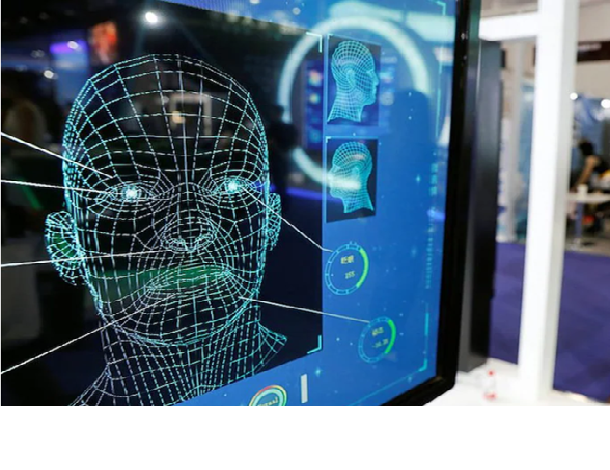
    As facial recognition technology (FRT) is gradually being implemented across New Zealand’s retail landscape, a troubling gap has emerged in how one of the country’s major retailers is handling its rollout. With only internal notices, Briscoes Group operator of Briscoes Homeware and Rebel Sport has been trialling FRT across 18 North Island stores since September

    Know More

  • AI Bias with Māori in Job Interviews

    AI Bias with Māori in Job Interviews

    The past few days we are hearing about AI and recruitment issues with you a young man who faced bias. I am increasingly concerned that the media is not giving Māori any consideration with their AI bias stories, relying on academics for opinions and for them to talk about us like we are not capable

    Know More

  • Meta’s Digital Ghost Patent

    Meta’s Digital Ghost Patent

    Meta’s Digital Ghost Patent: A Te Ao Māori Analysis   IMPORTANT NOTICE FOR FACEBOOK AND META USERS On 30 December 2025, Meta was granted a United States patent that would allow its platforms to use Artificial Intelligence to construct a digital simulation of you, trained on your posts, messages, voice recordings, browsing history, and purchases and

    Know More

  • Iran War and Data Sovereignty in New Zealand

    Iran War and Data Sovereignty in New Zealand

    For millennia, combatants have sought to cripple adversaries by destroying the infrastructure that sustains them, poisoning wells, burning bridges, bombing railways and oil refineries. In the war now engulfing the Middle East, data centres have emerged as a new category of target. The conflict has produced what analysts believe are the first publicly confirmed physical

    Know More

  • Governing in the Age of Artificial Intelligence

    Governing in the Age of Artificial Intelligence

    Artificial intelligence is no longer an emerging technology on the horizon, it is here, transforming industries, reshaping workforces, and fundamentally altering how organisations create value. For New Zealand boards, AI represents both a profound opportunity and a significant governance challenge. Directors who treat AI as purely a technical matter, something to be delegated to the

    Know More

  • Kaupapa Māori AI Framework

    Kaupapa Māori AI Framework

    I am excited to release, perhaps the world’s first Indigenous Peoples AI Framework for understanding and describing the nature of an Artificial Intelligence (AI). Drawing on mātauranga Māori, tikanga Māori, and te reo Māori, the framework is encapsulated in the whakatauāki :He Tangata, He Karetao, He Ātārangi” (A person, a puppet, a shadow). Each term describes

    Know More

  • Māori usage of the Internet and AI

    Māori usage of the Internet and AI

    InternetNZ recently released their annual “New Zealand’s Internet Insights 2025 survey findings” report. The following extracted form the report looks at Māori usage and is largely unchanged data from 2010. The Artificial Intelligence remains the same as the previous year.   Internet Use Māori are heavier internet users than NZ Europeans — 54% spend 4+

    Know More

  • Facial Recognition, Algorithmic Bias, and Compounded Harm to Māori and Pacific Communities

    Facial Recognition, Algorithmic Bias, and Compounded Harm to Māori and Pacific Communities

    A new paper I’ve written looks at Foodstuffs South Island’s facial recognition trial in Christchurch and raises serious questions about who bears the risk. The three trial stores sit in suburbs where Māori and Pacific populations are well below the city average. The stores excluded from the trial are in the suburbs with the highest

    Know More

  • Responsible AI in New Zealand

    Responsible AI in New Zealand

    New Zealand has developed a comprehensive suite of AI governance instruments, including the Algorithm Charter (Stats NZ, 2020), Privacy Act 2020, Digital Identity Services Trust Framework Act 2023, Biometric Processing Privacy Code 2025 (Office of the Privacy Commissioner, 2025), and responsible AI guidance for both public and private sectors (Ministry of Business, Innovation and Employment,

    Know More

  • Māori AI and Unequal Futures

    Māori AI and Unequal Futures

    The New Zealand Reserve Bank released a report “Assessing AI and Robotics Exposure in the New Zealand Labour Market Using Large Language Models“. The analysis finds that Māori workers appear to have lower exposure to AI and robotics than other groups. While this may initially seem positive, it risks being misinterpreted. In the report, higher AI

    Know More

  • Autonomous AI Governance Guidance for New Zealand Organisations

    Autonomous AI Governance Guidance for New Zealand Organisations

    This document provides governance guidance for New Zealand organisations considering the deployment of autonomous AI agents. It is not legal advice. It is written by a practitioner with governance experience in New Zealand and expertise in international AI governance. Autonomous AI agents such as OpenClaw represent a material shift in organisational risk. Unlike conventional AI,

    Know More

  • Māori likely to see graphic or extreme content

    Māori likely to see graphic or extreme content

    The 2026 Online Exposure: Experiences of Extreme or Illegal Content in Aotearoa report from the Classification Office provides a comprehensive look at the prevalence and impact of extreme or illegal online content within New Zealand. This report examines the experiences of extreme or illegal content among various age groups and how it affects the population.

    Know More

  • AI blackface – Is te ao Māori next?

    AI blackface – Is te ao Māori next?

    A social media wildlife expert called a First Nations version of Steve Irwin drew a large following that The Guardian exposed the account as an AI-generated character. A South African content creator reportedly ran the operation from New Zealand. Indigenous experts have described the account as AI and digital blackface: modern racial impersonation that simulates

    Know More

  • Bias in Health AI

    Bias in Health AI

    When Clinical Algorithms Don’t See Us. Māori Data Sovereignty Approaches to Detecting and Mitigating Bias in Health AI The rapid adoption of artificial intelligence (AI) and algorithmic decision support in health systems is unfolding within long standing patterns of inequity for Indigenous peoples. In Aotearoa New Zealand, Māori already experience systematic barriers to care, racism,

    Know More

  • Māori Forensic Deceased Data

    Māori Forensic Deceased Data

    Tikanga Māori Perspectives on Forensic Data: Dr Angela Clark on Digital Governance for Tūpāpaku in Aotearoa New Zealand Emerging forensic technologies, high-resolution imaging, 3D reconstructions, and AI-assisted analysis are rapidly changing how data from tūpāpaku (the deceased) is created, used, shared, and stored in Aotearoa New Zealand. While these tools can improve identification outcomes and

    Know More

  • Māori views of Digital Credentials

    Māori views of Digital Credentials

    In New Zealand, a digital credential is a secure, digital version of something that proves who you are or what you’re entitled to, for example your identity, age, or role in a business that you can store in a wallet style phone or device app and present online or in person. This includes your digital

    Know More