Briscoes and Rebel Sport FRT with no visible Māori consultation
As facial recognition technology (FRT) is gradually being implemented across New Zealand’s retail landscape, a troubling gap has emerged in how one of the country’s major retailers is handling its rollout. With only internal notices, Briscoes Group operator of Briscoes Homeware and Rebel Sport has been trialling FRT across 18 North Island stores since September 2025, making it the fourth major retailer to adopt the technology following Foodstuffs and Bunnings.
While Bunnings have publicly documented their engagement with Māori communities, Māori data sovereignty experts, and tikanga Māori principles, and Foodstuffs North and South Island have been publicly transparent; Briscoes has said almost nothing on the subject, with what appears to be against the requirements of New Zealand’s Biometric Processing Privacy Code 2025, which demands that organisations assess the cultural impacts of biometric processing on Māori before proceeding.
The Foodstuffs trial that set the standard
Foodstuffs North Island (FSNI) ran their trial that effectively opened the door for all other retailers. The Office of the Privacy Commissioner investigated FSNI’s trial across 25 supermarkets between February and September 2024, finding it complied with the Privacy Act because strong privacy safeguards were in place. Of the 225,972,004 faces scanned, 99.999% were deleted within one minute, generating 1,742 alerts, of which 1,208 were confirmed matches.
FSNI was notably public about its results. It published its own findings, reporting that stores trialling FRT became around 40% better at recognising trespassed people compared to control stores, and that in just under half of all alert cases the repeat offender was asked to leave. An independent evaluation by research firm Scarlatti found the technology reduced serious harm by an estimated 16% and found strong public support, justifying its use.
However, a facial recognition system at New World Rotorua misidentified a Māori woman as a known offender, wrongfully accusing her of trespassing and causing her public embarrassment in front of her 13-year-old son. The woman, Te Ani Solomon, said 100 preventions for nine shoppers compromised was a high rate of harm: “From where I’m standing, and I’m sure eight other people would agree, that was no success.” Māori AI and data experts said the misidentification was not surprising.
When Bunnings announced its rollout, the contrast with Briscoes became immediately visible. Bunnings completed a Privacy Impact Assessment, engaged a Māori digital sovereignty expert to ensure its approach aligns with tikanga Māori and Māori data sovereignty principles (that expert is the author of this article), and commissioned independent research including focus groups, interviews with team members, and a nationally representative survey of 1,000 New Zealanders.
Bunnings stated it had considered and incorporated tikanga Māori in its approach, including as part of team training, in responding to misidentification, in engaging with affected individuals, and in ensuring that all personal information is handled appropriately.
Bunnings NZ general manager Melissa Haines said: “Proceeding with FRT in NZ was not a quick decision. We’ve undertaken a thorough assessment process, with privacy, safety and community expectations at the forefront, and we are taking a phased approach to get this right.”
The company also set its accuracy threshold at 93%, higher than Foodstuffs’ original 90% starting point. Bunnings also commissioned independent research showing that 93% of 1,000 New Zealanders support the use of FRT if it improves safety by more than 10%, with fewer than one in ten opposing it in principle.
The key point is that Bunnings did all of this publicly and proactively it named the Māori digital sovereignty expert engagement (the author of this article) on its own website before the trial began, framing it as a deliberate part of its governance framework, not an afterthought.
Briscoes
Briscoes’ public communications are conspicuously wanting. Briscoes said only that it let customers know about the trial with signs on the store doors, and that a thorough process was in place to ensure the technology did not negatively impact customers. There is no public mention of any Māori consultation, no reference to tikanga Māori, no named expert engagement, and no community research.
The Biometrics Code, which came into force for new biometric processing on 3 November 2025, two months after Briscoes started its trial, requires that the proportionality assessment must consider the cultural impacts and effects on Māori, and that organisations without internal expertise must consider engaging external advisers to provide cultural advice. A failure to address identified cultural impacts may make the biometric processing less proportionate.
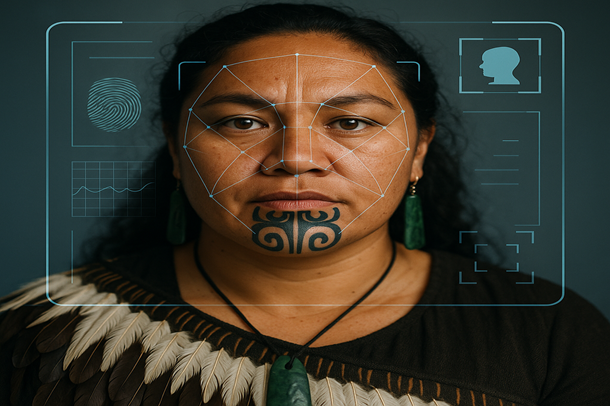
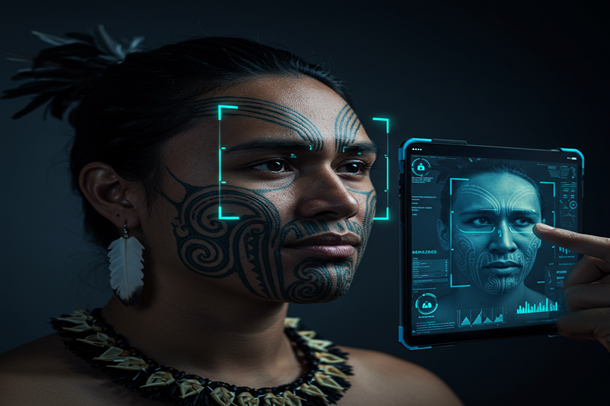
Māori tech experts including myself have specifically highlighted that the Ministerial Advisory Group on retail crime, the group whose work informed the broader policy environment enabling this rollout has no Māori voices and is very limited in terms of representation of those the technology will likely discriminate against. We have also flagged two specific technical problems that make Māori particularly vulnerable: there is no training dataset of New Zealand faces, and there are documented issues with Māori faces, particularly those with moko.
In summary, Foodstuffs trialled FRT, it learned hard lessons including a high-profile Māori misidentification. Bunnings absorbed those lessons and built Māori engagement explicitly into its public framework before going live. Briscoes started six months before the Code came into force, is now halfway through its trial, and has said nothing publicly about Māori engagement, despite operating in a legal and ethical environment that is unambiguous about the requirement to consider it.
Conclusion
Each retailer that has adopted facial recognition technology in New Zealand has had the benefit of learning from those who came before. Foodstuffs pioneered the trial and, despite its compliance with the Privacy Act, produced a cautionary lesson in the real human cost of misidentification of a Māori woman. Bunnings have built Māori engagement into its framework from the outset and making that process publicly visible before a single camera went live.
What Briscoes has demonstrated is a serious concern as they have not yet shown their FRT works, a choice that warrants serious scrutiny from the Office of the Privacy Commissioner.
DISCLAIMER: This post is the personal opinion of Dr Karaitiana Taiuru and is not reflective of the opinions of any organisation that Dr Karaitiana Taiuru is a member of or associates with, unless explicitly stated otherwise.
To provide the best experiences, we use technologies like cookies to store and/or access device information. Consenting to these technologies will allow us to process data such as browsing behavior or unique IDs on this site. Not consenting or withdrawing consent, may adversely affect certain features and functions.
Functional
Always active
The technical storage or access is strictly necessary for the legitimate purpose of enabling the use of a specific service explicitly requested by the subscriber or user, or for the sole purpose of carrying out the transmission of a communication over an electronic communications network.
Preferences
The technical storage or access is necessary for the legitimate purpose of storing preferences that are not requested by the subscriber or user.
Statistics
The technical storage or access that is used exclusively for statistical purposes.The technical storage or access that is used exclusively for anonymous statistical purposes. Without a subpoena, voluntary compliance on the part of your Internet Service Provider, or additional records from a third party, information stored or retrieved for this purpose alone cannot usually be used to identify you.
Marketing
The technical storage or access is required to create user profiles to send advertising, or to track the user on a website or across several websites for similar marketing purposes.