My ongoing investigation of scraped and stolen Māori knowledge by AI has identified more than 80 Māori authors, 8 non Māori kaupapa Māori authors (194 plus titles) and song artists; 100’s of videos from Te Karere TVNZ and Marae TV sourced primarily from YouTube, Māori academics articles published in Elsevier and JSTOR, including texts from the Journal of the Polynesian Society and Victoria University NZETC web site, Waitangi Tribunal reports, ethnographers including a large set of Elsdon Best (almost his entire publications) , New Zealand Government data sets, and many other Māori related content that AI has stolen. Included are other digital texts which in many cases are used for training by big tech companies and increasingly by individual Māori, training their own custom AI based on the big tech AI, indirectly assisting the piracy of Mātauranga Māori.
The list is at the end of this article.
Stolen Māori Knowledge
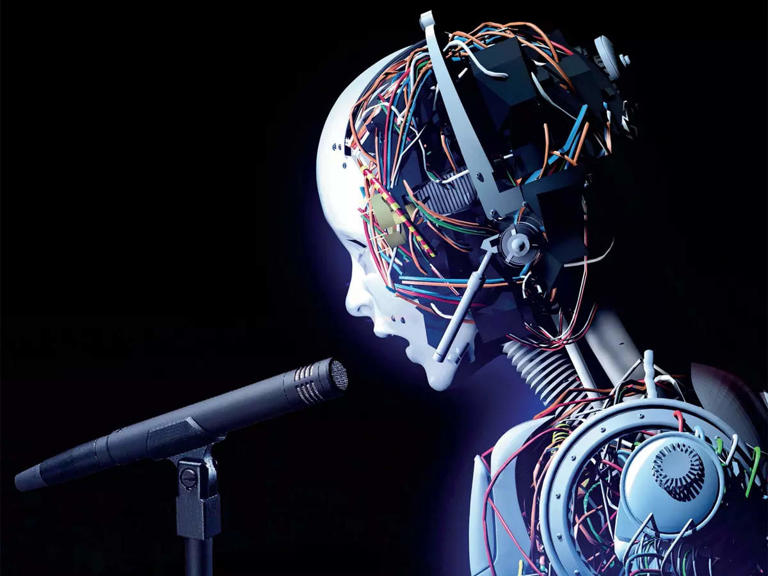
Artificial intelligence (AI) is rapidly reshaping how people seek, receive, and understand knowledge. Traditionally, not so long ago, we turned to trusted experts, libraries, or search engines, but now more and more of us now turn first to an AI chatbot for an answer. These systems present themselves as knowledgeable and neutral. Yet the information that shapes their responses is gathered, selected, and controlled by a small number of powerful corporations whose methods remain largely hidden from public view (see He Karetao).
AI companies acquire training material in many ways. Some license content through formal agreements. Others collect it through large-scale web scraping, public data repositories, search indexes, and even pirated collections, some from individuals training custom AI sub models.
From a Māori perspective, the legality of access does not determine the ethics of use. Tikanga requires meaningful engagement, consent, and recognition of the relationships between knowledge and its custodians.
For creators who wish to protect their work, several technical measures exist, including digital watermarks and software designed to disrupt AI training. These tools may reduce future unauthorised use, but they cannot undo knowledge that has already been absorbed into existing systems.
Some argue that AI benefits from learning from as many sources as possible, on the basis that broader datasets improve accuracy and reduce bias. But quantity alone does not ensure fairness or balance. AI systems are further shaped by decisions made inside technology companies about what to prioritise, how responses should be framed, and which topics should be restricted. These are choices that reflect particular values and worldviews. They are not neutral representations of knowledge.
The way knowledge is gathered, stored, shared, and used should reflect tikanga and uphold the mana of those who hold and create it. AI does the opposite. It ingests digitised data, often it commissions the digital production of paper based books, at a scale and speed that is difficult to comprehend, largely without permission and largely without accountability.
Recently, Futurusim ran a story about AI companies bulk purchasing rare books to digitise. The physical books are then destroyed. The ramifications are as we have seen with AI hallucinations, that the knowledge can be manipulated and changed. In the future, our genuine histories could be rewritten or completely rewritten out of history books. This topic is another article.
There is a colonial precedent worth remembering. Both the Crown and The New Zealand Company systematically acquired by deception, theft, war and other immoral means nearly 96% of Māori land in New Zealand by 2000. The pattern was acquisition first, and legitimacy claimed afterward. AI training operates on a similar logic: it draws in whatever digital information it can reach, and questions of law, morality, and jurisdiction are treated as obstacles to be worked around rather than limits to be respected.
Rangatiratanga
The secrecy surrounding AI training raises fundamental questions of rangatiratanga and informed consent. Many AI systems have been trained on millions of books, articles, artworks, films, recordings, and other creative works taken without the permission of their creators.
This practice erodes the ability of authors, artists, researchers, and Indigenous communities to maintain authority over their intellectual and cultural treasures. It also raises serious concerns about the use of mātauranga Māori and other Indigenous knowledge without consultation or appropriate cultural safeguards.
The training data is not drawn only from trusted sources. It can also carry misinformation, academic bias, harmful stereotypes, racism, violent material, and other content that undermines cultural values and entrenches existing inequities. Without careful stewardship, AI systems reproduce these biases while presenting them as objective truth.
From a te ao Māori perspective, genuine diversity of knowledge must include respect for Māori authority, cultural context, and the right of communities to determine how their knowledge is used. AI should not simply consume knowledge as a resource. It should engage with knowledge in ways that uphold mana, recognise whakapapa, and support the ongoing exercise of rangatiratanga.
Māori individuals scraping data
I have witnessed multiple instances of Māori individuals using the big tech AI companies to create their own AI systems. They digitise books on a specific topic such as mātauranga, tikanga, weaving, waitangi tribunal reports, or upload new Māori data such as health data into these sub sets of big (Frontier) AI. Often this is done to create a commercial product or for intellectual exercise (haututu). The issue is that if one reads the Terms, the Frontier AI simply uses that same data for their own learning.
In other instances, Māori individuals and collectives believe that the more Māori Data an AI has, the more it can represent Māori. Again, history has a reminder of this, regardless of what your opinion is, our history has a record of Kūpapa.
The real issue here is the lack of a national and local discussions about what mātauranga/data we share with AI and what we retain to our traditional learning. Another historical reflection we can learn from is the Whare Wānanga, the generations of whānau who were assigned marae roles based on whakapapa.
Opening the black box
Opening the “black box (He Karetao)” of AI is not simply a matter of technical transparency; it is an act of accountability. Understanding where a system has learned from allows communities to determine whether their knowledge has been used appropriately, and whether the principles of respect, reciprocity, and guardianship have been upheld.
Tools that identify which books, research articles, videos, and creative works appear in AI training datasets support that accountability. They give creators and communities an opportunity to see how their work may have been collected, and whether it has contributed to the development of commercial AI systems.
Conclusion
The question, ultimately, is not whether AI can access mātauranga Māori. Much of it is already digitised and already reachable. The question is whether that access was ever consented to, and whether the authority to decide sits where it should: with the hapū and iwi who are the custodians of that knowledge.
There is an increasing need for traditional knowledge not to be published but shared orally among multi generations in order to protect traditional knowledge.
Māori have many historical lessons to reflect upon and to act now.
Who is to say that a future AI will not claim the far North manawhenua is Ngāi Tahu and vice versa, or that Māori did cede sovereignty? Will future generations who rely on AI for the truth have any pathways to the source of the truth? That question I argue is our decision to make now, not to wait for someone else to tell us. There is an urgent need for Māori communities and knowledge holders to discuss these issues and address the need for evolving nation wide tikanga.
Source list of Māori IP owners
This list excludes web sites which have more than likely been scraped and digital repositories that are online due to technical difficulties to prove this. The list is not complete, and I am aware that some Māori traditional music artists have stated their work is in various AI models that have reproduced other music titles without permission or acknowledgement.
It is important to note that AI companies may omit certain works when training. The mention of an author/artist or a work in the list is not definitive proof that it was used. Companies often use multiple datasets in training, so the absence of a given work is also not proof that it hasn’t been used. Note that some datasets contain multiple copies of certain works.
There are multiple public databases, in particular the searchable Works List for Bartz v. Anthropic is on the official settlement website, anthropiccopyrightsettlement.com, where you can search by author name, title, ISBN/ASIN, or publisher. Authors in this database have registered copyright in America and are seeking compensati0n. If you are in the database, you likely have a lawyer and are aware. If you don’t find your books on the Works list, they are not included in the settlement, or you have not entered the details accurately.
I have also deemed it impossible to try to reach out to everyone and I have assumed most authors are already aware their work has been scraped by AI.
UPDATE: Most authors were not aware. I will contact as many as possible new authors prior to updating.
I have chosen to list these names as they are already public information spread across multiple areas on the Internet. It is also to highlight the fact that no one who has a publication (digital or in hard copy) and no matter how specialised or public a person is, no information or individual is safe from AI scraping and stealing your/our information.
Also, it highlights to others that Māori are not immune from AI, and we need to be more proactive now, lobby government, marae, hapū and community leaders to raise awareness of both the benefits and harms of AI.
If you want to be removed from my list, please use the contact form .
To provide the best experiences, we use technologies like cookies to store and/or access device information. Consenting to these technologies will allow us to process data such as browsing behavior or unique IDs on this site. Not consenting or withdrawing consent, may adversely affect certain features and functions.
Functional
Always active
The technical storage or access is strictly necessary for the legitimate purpose of enabling the use of a specific service explicitly requested by the subscriber or user, or for the sole purpose of carrying out the transmission of a communication over an electronic communications network.
Preferences
The technical storage or access is necessary for the legitimate purpose of storing preferences that are not requested by the subscriber or user.
Statistics
The technical storage or access that is used exclusively for statistical purposes.The technical storage or access that is used exclusively for anonymous statistical purposes. Without a subpoena, voluntary compliance on the part of your Internet Service Provider, or additional records from a third party, information stored or retrieved for this purpose alone cannot usually be used to identify you.
Marketing
The technical storage or access is required to create user profiles to send advertising, or to track the user on a website or across several websites for similar marketing purposes.