Introduction
Digital identity in New Zealand (DIiNZ) must recognise that Māori identity is not only an attribute of an individual account, but also relational, collective, and grounded in whakapapa, whānau, hapū, iwi, whenua and other traditional collective identity mechanisms.
Most digital identity systems begin from a different assumption, that one person, one account, verified by an institution, often the state, one that colonised its Indigenous Peoples while also assimilating their culture and identity.
When that model is imposed, Māori identity is reduced (historically again) to the limited categories anticipated by system designers and the Crown.
These principles set a minimum threshold for systems operating in New Zealand. They must be embedded in Māori governance, architecture, procurement, accreditation, and operations, not added later as cultural language or consultation material.
1. Te Tiriti o Waitangi
Te Tiriti o Waitangi is the threshold that a digital identity system must meet.
Māori identity data, including information connected to whakapapa, whenua, whānau, hapū, iwi, names, and biometrics constitute taonga. Consistent with Article II, systems must enable meaningful tino rangatiratanga over that data.
- Do the system’s Māori provisions change how it is governed and how it operates, or do they merely describe good intentions?
- If removing the Māori provisions would make no operational difference, they are decorative rather than substantive.
2. Whakapapa
Māori identity must not be treated as exclusively individual, fixed, or Crown defined. Whakapapa locates people within relationships: to ancestors, whānau, hapū, iwi, marae and future generations.
Digital identity systems must be capable of recognising relational identity and collective affiliations without forcing them into a narrow individual account model.
- Whakapapa, marae, hāpori, hapū, and or iwi affiliations may only be self-asserted by the person concerned or attested by the relevant collective authority.
- Such affiliations must never be inferred, predicted, or derived from names, addresses, location, biometrics, behavioural data, or other proxy data.
- Algorithms must not classify or infer Māori ethnicity, whakapapa, iwi, or hapū affiliation without explicit authority.
- A system must not treat the absence of a conventional record as evidence that a whakapapa relationship does not exist.
Ethnicity or affiliation inference by algorithm breaches this principle, regardless of the stated purpose.
3. Tino rangatiratanga
Authority over collective Māori identity attributes rests with the relevant marae, hāpori, hapū, and or iwi. It does not automatically rest with the Crown or a platform provider.
Digital identity systems must support marae, hāpori, hapū, and or iwi to exercise authority over credentials and identity information connected to their people.
This includes the ability for marae, hāpori, hapū, and or iwi to:
- Operate or appoint trusted credential issuers on terms they set;
- Determine the conditions under which collective identity attributes are issued, verified, updated, suspended, or revoked;
- Decline participation in a system without penalty;
- Withdraw from participation where governance, security, or use conditions no longer meet their requirements;
- Set tikanga-based conditions for access, sharing, retention, and reuse of identity information;
Participation must not require marae, hāpori, hapū, and or iwi to surrender control over their data, governance, or decision-making authority.
4. Mana motuhake
Participation in a digital identity system must be voluntary and remain voluntary in practice.
No Māori person should be disadvantaged, delayed, charged more, denied a service, or subjected to greater scrutiny because they choose not to hold or use a digital credential. Equivalent non-digital pathways must be maintained, properly resourced, and capable of delivering the same outcome within a comparable timeframe.
Choice is a core design requirement, particularly where confidence in Crown or institutional involvement is low.
Systems must therefore provide:
- Non-digital and assisted pathways;
- Clear alternatives to biometric verification;
- The ability to use only the minimum identity information necessary for a transaction.
- Genuine consent, including the ability to decline optional data collection without losing access to essential services.
- The ability to leave a service and withdraw consent, subject only to clearly stated legal retention obligations.
5. Tapu
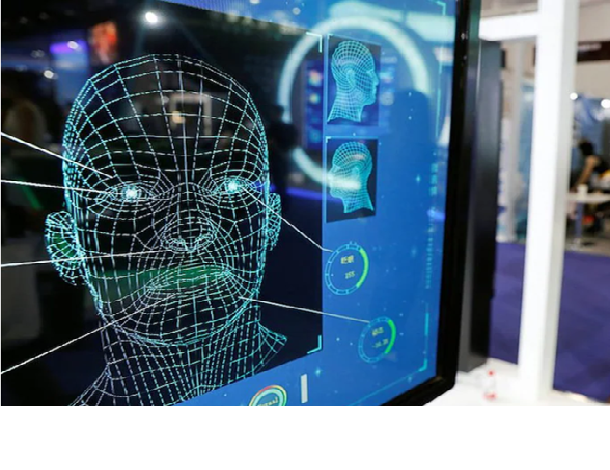
The face and head are tapu. Moko kanohi and moko kauae may carry whakapapa, identity, mana, and cultural meaning. Biometric information derived from Māori faces therefore requires the highest level of protection.
Biometric collection or use must be necessary, proportionate, and strictly limited. It must not become the default condition of participation in public or essential services.
Any use of biometric data must involve:
- Specific, informed, freely given, and revocable consent.
- A clear explanation of the purpose, method, recipient, retention period, and consequences of collection.
- A non-biometric alternative that provides equivalent access to the service.
- No use beyond the original transaction unless fresh authority is obtained.
- No retention beyond what is necessary for that transaction or an explicit legal obligation.
- No use to train, test, improve, or validate artificial intelligence or biometric models without explicit individual and collective consent.
- Independent testing for accuracy and disparate impact on Māori, including people with moko.
- Tikanga appropriate actions when taking, deleting and storing biometric data
A system must not produce disproportionately high false rejections, identity challenges, surveillance risks, or service denial for Māori. Where this occurs, deployment must pause until the harm is understood and remedied.
6. Kaitiakitanga
Entities that hold Māori identity information are kaitiaki, not owners. Their responsibilities extend beyond technical security and legal compliance.
Data minimisation is a tikanga obligation as well as a privacy obligation. A system should collect only what is necessary, retain it only as long as necessary, and disclose it only where there is clear authority.
Data residency is not the same as data sovereignty. Storing data in New Zealand does not itself give Māori authority over it.
Every system must make clear:
- Who controls the data.
- Who can access it and for what purpose.
- Which jurisdiction and legal rules apply.
- Whether the data may be transferred, matched, sold, reused, or disclosed.
- How Māori individuals, marae, hāpori, hapū, and or iwi can exercise authority over its use.
- How data will be returned, deleted, or protected if a provider changes ownership, fails, or exits the market.
Stewardship must be demonstrable through governance rights, technical controls, contractual safeguards, auditability, and enforceable remedies.
7. Whanaungatanga
Māori regularly act in relationship with and for one another. Kaumātua may act for whānau; whānau may support tamariki, kaumātua, disabled relatives, and whāngai. These arrangements may not be fully reflected in conventional legal or state records.
Digital identity systems must support delegated authority, shared access, guardianship, and representation arrangements that reflect tikanga and lived whānau realities.
Systems should enable:
- Delegated authority that can be granted, limited, reviewed, and withdrawn.
- Recognition of whāngai and other tikanga-based care relationships.
- Assisted identity processes for kaumātua, tamariki, and people who need support to engage digitally.
- Safeguards against coercion, misuse, and inappropriate delegation.
- Human review where a relationship cannot be represented through standard legal documentation.
A system that recognises only the isolated, legally documented individual will systematically fail many whānau.
8. Te reo Māori
A person’s name must be treated with dignity and accuracy. Systems must correctly accept, store, display, search, and match Māori names, including macrons, full names in te reo Māori, and names changed in connection with whakapapa, colonisation, whānau, or tikanga.
Discriminatory design includes validation rules or matching processes that:
- Reject macrons or other correct orthography.
- Treat a correctly spelled Māori name as an error.
- Force names into unsuitable character limits or formats.
- Produce repeated identity mismatches because of names, naming conventions, or transliteration.
- Make it disproportionately difficult to update a name.
- Ignoring that many Crown authorities have misspelled Māori names.
Interfaces, help materials, consent information, complaint processes, and key service interactions should be available in te reo Māori.
9. Manaakitanga
Digital identity must reduce barriers rather than deepen existing inequities. A technically functional system is not acceptable if it produces unequal access, unequal error rates, or unequal burdens for Māori.
Before deployment and throughout operation, providers must assess and publish Māori-specific outcomes, including:
- Uptake and successful enrolment rates.
- Verification failure and false-rejection rates.
- Error, challenge, suspension, and fraud-flagging rates.
- Time taken to resolve problems.
- Access outcomes for rural communities, low-connectivity areas, and people without suitable devices.
- The impacts of cost, digital literacy, disability, language, and documentation requirements.
Algorithmic and biometric bias testing must occur before deployment and continuously thereafter. The results must be independently reviewed and transparent enough for affected communities to evaluate whether the system is safe and equitable.
10. Utu and accountability
When a digital identity system harms a Māori person, marae, hāpori, hapū, and or iwi, there must be a timely, accessible, and effective path to remedy.
Where an automated process adversely affects someone, for example, through a failed verification, identity flag, account suspension, or service denial, a named human decision-maker must be accountable and able to reverse the outcome.
Human oversight alone is insufficient. The requirement is human accountability for the loop: a person or institution must hold responsibility for the decision, its consequences, and its correction.
Redress processes must be:
- Independent of the original decision-maker where appropriate.
- Free, accessible, and available through non-digital channels.
- Prompt enough to prevent loss of essential services, income, housing, health care, education, or whānau connection.
- Capable of recognising collective as well as individual harm.
- Able to provide tikanga-based resolution where requested and appropriate.
- Empowered to require correction, deletion, compensation, suspension of a harmful process, and systemic reform.
Applying the principles
For every digital identity system, policy, procurement decision, accreditation assessment, or service redesign, three questions should be asked.
Architecture or decoration?
Would removing the Māori provisions change the system’s governance, data flows, permissions, verification methods, risk controls, or complaint process?
If the answer is no, the provisions are decorative.
Who holds authority?
Can individual Māori, marae, hāpori, hapū, and or iwi exercise real authority over identity information and its use? Or are they limited to giving feedback on decisions already made by the Crown or a vendor?
Authority must include the ability to say no, set conditions, withdraw, and obtain remedy.
Who carries the risk?
If the system fails, who bears the harm? Consider false rejection, surveillance, identity theft, exclusion from services, inaccurate records, biometric misuse, and damage to collective identity or mana.
If Māori carry a disproportionate share of the risk, the system has not met the threshold of equity, manaakitanga, or Te Tiriti-consistent design.
Minimum commitment
A digital identity system in New Zealand should not ask Māori to fit themselves into a model designed without them. It should be designed so that Māori identity, authority, relationships, language, and tikanga can shape the system itself.
The standard is not whether Māori can be included in a digital identity system. The standard is whether the system can operate in a way that protects and gives effect to Māori rights, mana, and tino rangatiratanga.